


Do you sometimes feel like you need to be some kind of business superhero to defend your price?
In a B2B Solution Sale the Prospect’s first gambit in price negotiation will frequently be to tell us that our offer is too expensive, and that usually leaves the Salesperson with the feeling that they have to discount to close the deal. However, with a little investigation and basic mathematics you can create an uncontestable ROI argument by leveraging publicly available, basic corporate data to defend your price and strengthen your negotiating position. For publicly quoted companies just open their annual report. For others, start with LinkedIn and Crunchbase. They may not tell you everything but you’ll get enough to start with.
You will need these three basic metrics which have a strong interdependency and which very few prospects will (be able to) hide from you:
$ annual revenues – if we know annual revenues, we can assess how much the Prospect is used to paying and therefore how much they can pay. A company with higher revenues will have bigger budgets and make larger purchases. What percentage of their revenues is your offer? Is that a viable amount?
# employees – if we know how many employees a Prospect has, we can use this to make a good estimate of their costs, and also of their profitability, because each business sector has an average revenue per employee metric.
# customers – many companies freely advertise how many customers they have to demonstrate their success. This is gold – use it!
BASIC CALCULATIONS TO LEVERAGE THE DATA
$ annual revenues ÷ # customers = $ value of each customer per year. Assuming customers stay on average 5 years this gives an indication of how much losing a customer costs both in revenue and long-term cash flow.
$ annual revenues ÷ # employees = average revenue per employee. Comparing this figure between companies in the same sector or with your own company can indicate the relative health of the Prospect’s business and whether they can actually pay now and in the future.
# employees x ($ average salary + $ company’s employment tax obligations) = $ average employee cost
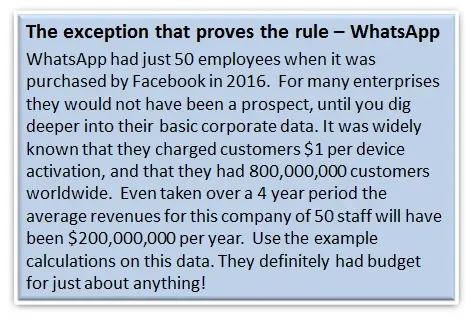
# employees x $ average employee cost x 3 = $ annual revenues (unless you are WhatsApp).
$ average revenue per employee vs $ average employee cost – indicates if the prospect is losing or making money.
$ annual revenues = # employees x $ average revenue per employee (industry competitor) – if they don’t want to share that information
$ average order value – this tells you how much each new customer acquisition is worth. Every company knows the AOV of its new sales but if they won’t tell you a good rule of thumb is: $ value of each customer per year ÷ customer churn rate
If the customer asks you for a price before you can get this information it is probably too late, but if you can collect this information and gain the Prospect’s consensus to make reference to it inside your proposal it becomes much more difficult for them to lead their price negotiation with “It’s too expensive”. You can probably close deals without getting this corporate data, but you will close more deals, and faster, for more money, if you leverage it to defend your price. And then you really will feel like a superhero.
How often do you end up defending your price? How do you explain it to the Prospect?
Follow me: